

Table of Contents
Introduction to Mount Rinjani
Rising majestically to 3,726 meters (12,224 feet) above sea level on Lombok Island, Mount Rinjani stands as Indonesia’s second-highest volcano and one of Southeast Asia’s most spectacular trekking destinations. The active volcano forms part of the famous “Ring of Fire” and offers adventurers an unforgettable journey through diverse landscapes—from lush tropical forests to barren volcanic terrain.
At the heart of Mount Rinjani’s allure is its stunning crater lake, Segara Anak (Child of the Sea), a sacred place in local Sasak and Balinese culture. The shimmering turquoise waters, hot springs, and the active cone of Gunung Baru rising from the lake create an otherworldly panorama that rewards those who undertake the challenging Mount Rinjani trekking experience.
For generations, locals have considered this mountain a place of spiritual significance, where gods reside and ancestral spirits dwell. Today, Mount Rinjani attracts thousands of trekkers annually, each seeking to test their endurance while witnessing some of Indonesia’s most breathtaking natural scenery.
Planning Your Mount Rinjani Trekking Adventure
Best Time to Trek Mount Rinjani
Timing your trek correctly is crucial for a successful and enjoyable experience. The official Mount Rinjani trekking season typically runs from April to November, with the mountain often closed during the rainy season (December to March) due to dangerous conditions.
The ideal months for trekking are May through September, when rainfall is minimal and visibility optimal. July and August represent peak season with the clearest skies, but also bring larger crowds. For a balance between good weather and fewer trekkers, consider the shoulder months of May, June, or September.
Temperature varies significantly with elevation:
- At the base: 25-30°C (77-86°F)
- Mid-mountain: 15-20°C (59-68°F)
- Summit: Often below 5°C (41°F), especially before sunrise
Night temperatures can drop considerably, making proper gear essential regardless of when you visit.
Routes and Duration Options
The Rinjani National Park offers several established routes for trekkers with varying fitness levels and time constraints:
Senaru Route (North)
- Traditional starting point for most treks
- More gradual ascent through lush rainforest
- Beautiful waterfalls near the trailhead
- 2-4 days depending on itinerary
Sembalun Route (East)
- Begins in grassland savanna
- Steeper but offers more open views
- Better approach for summit attempts
- 2-4 days depending on objectives
Timbanuh Route (South)
- Less traveled, more challenging
- Primarily used by experienced trekkers
- Diverse ecosystems and wildlife opportunities
- Typically 3-5 days
Most trekkers opt for either the classic 3-day/2-night package, which includes visiting the crater rim and lake, or the more challenging 4-day/3-night journey that adds the summit climb. The full loop, combining both Senaru and Sembalun routes, provides the most comprehensive experience.
Permits and Regulations
All trekkers require permits to enter Rinjani National Park. These can be arranged through licensed tour operators or directly at park offices in Senaru or Sembalun. Current permit fees (as of 2024) typically include:
- Weekday entry: IDR 150,000 (~$10 USD) for foreigners
- Weekend/holiday entry: IDR 250,000 (~$16 USD) for foreigners
- Additional conservation fees and local taxes
The Indonesian government implements strict regulations to protect the mountain ecosystem:
- No single-use plastics allowed on the mountain
- Carry-in, carry-out trash policy
- Mandatory guide requirement for all foreign trekkers
- Regular trail closures for environmental recovery
The park management occasionally closes specific areas or the entire mountain, so checking current conditions before planning your trip is essential.
Preparing for Mount Rinjani Trekking
Physical Preparation
Mount Rinjani trekking demands considerable physical fitness, with trekkers facing long days of steep ascents and descents on challenging terrain. Begin training at least 2-3 months before your trek, focusing on:
- Cardiovascular endurance (running, cycling, swimming)
- Leg strength (hiking, stair climbing, squats)
- Core stability exercises
- Practice hikes with a loaded backpack
Many trekkers underestimate the physical demands, particularly the summit push (often beginning around 2:00 AM) and the steep descent into and out of the crater. Regular training will significantly enhance your experience and chances of reaching your objectives.
Essential Gear
Proper equipment is crucial for safety and comfort during your trek. The essential gear list includes:
Clothing:
- Moisture-wicking base layers
- Insulating mid-layers (fleece or down)
- Waterproof/windproof outer shell
- Sturdy hiking boots (well broken in)
- Warm hat and gloves for summit day
- Quick-dry hiking pants
- Extra socks
Equipment:
- Headlamp with extra batteries (essential for summit climb)
- Trekking poles to reduce strain on knees
- Sleeping bag rated for temperatures around 0°C (32°F)
- Sunglasses, sunscreen, and lip protection
- First aid kit with blister treatment
- Water purification method
- Camera for capturing the spectacular views
Most tour operators provide tents, sleeping mats, and cooking equipment, but always confirm what’s included before booking.
Health and Safety Considerations
The mountain environment presents several health challenges:
- Altitude sickness: The summit reaches 3,726 meters, where oxygen levels are significantly lower. Acclimatize properly by ascending gradually and staying hydrated.
- Dehydration: Carry at least 2-3 liters of water capacity.
- Temperature management: Be prepared for both hot daytime conditions and near-freezing nighttime temperatures.
- Stomach issues: Bring appropriate medication and ensure food preparation is hygienic.
Travel insurance with emergency evacuation coverage is strongly recommended, as medical facilities are limited on the mountain and in surrounding villages.
The Mount Rinjani Trekking Experience
Day-by-Day Breakdown: 3-Day Classic Trek
The most popular Mount Rinjani trekking itinerary is the 3-day route that includes:
Day 1: Sembalun to Crater Rim
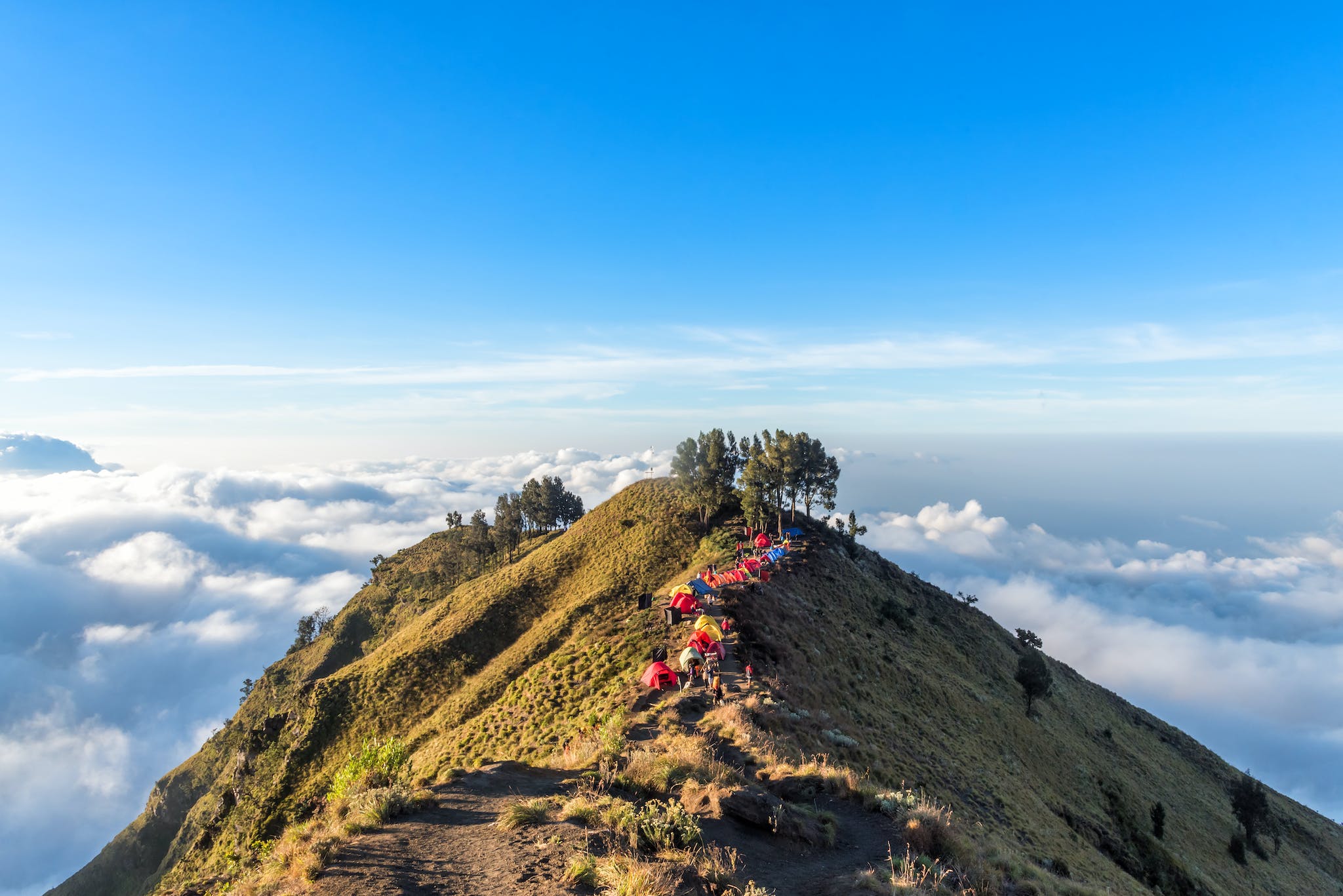
Beginning in Sembalun village (1,156m), trekkers start through gently sloping grasslands before tackling increasingly steep terrain. The trail passes through several rest posts (Pos 1, 2, and 3) before the final challenging push to the crater rim camp at Plawangan Sembalun (2,639m). This campsite offers spectacular sunset views over the crater lake and, on clear days, across to Bali’s Mount Agung.
Day 2: Crater Lake and Hot Springs
A steep descent leads to Segara Anak lake (2,000m), where most groups spend several hours exploring the hot springs (with reputed healing properties) and the lake shore. Some itineraries include fishing for tilapia in the lake. After lunch, trekkers climb the equally steep path to Plawangan Senaru rim (2,641m) for their second night of camping, with dramatic views in both directions.
Day 3: Descent to Senaru
The final day features a long descent through changing vegetation zones, from montane forests to tropical rainforest. The trail passes beautiful waterfalls before reaching Senaru village, completing the traverse of the mountain.
Summit Extension Option
For those attempting the summit:
Summit Day
Usually integrated as an extra early start on day 2 or 3, depending on your itinerary. Trekkers typically begin around 2:00 AM from Plawangan Sembalun rim camp, hiking by headlamp up steep, loose scree slopes. The challenging 3-hour climb rewards successful climbers with a spectacular sunrise over Lombok, Bali, and the surrounding islands. After celebrating at the summit, trekkers return to their camp for breakfast before continuing with the standard itinerary.
Cultural and Natural Highlights
Beyond the physical challenge, Mount Rinjani trekking offers remarkable cultural and natural experiences:
- Diverse Ecosystems: The mountain hosts five distinct vegetation zones from tropical lowlands to alpine environment
- Wildlife Encounters: Possibility of spotting rare black Ebony leaf monkeys, barking deer, and over 100 bird species
- Religious Significance: Witnessing traditional ceremonies if your trek coincides with annual pilgrimages, typically held in the sixth month of the Sasak calendar
- Geological Wonders: Active volcanic vents, hot springs, and the relatively new cone of Gunung Baru, born from eruptions starting in 1944
Responsible Trekking Practices
The increasing popularity of Mount Rinjani has brought significant environmental challenges. Responsible trekkers can help protect this natural treasure by:
- Carrying out all trash (including toilet paper)
- Using biodegradable soap and toiletries
- Staying on established trails to prevent erosion
- Supporting tour operators with demonstrated environmental practices
- Respecting local customs and sacred sites
Several community initiatives now work to keep the mountain clean, including the Rinjani Women’s Trekking Guide Association, which combines environmental stewardship with creating opportunities for local women.
Practical Information and Tips
Choosing a Tour Operator
While independent trekking is technically possible for Indonesian nationals, foreign visitors must hire a licensed guide. When selecting a tour operator, consider:
- Environmental practices and waste management
- Quality of equipment provided
- Guide-to-client ratio
- Food quality and variety
- Emergency protocols and insurance
- Ethical treatment of porters
Prices vary significantly, from budget options around $150 USD to premium services exceeding $400 USD for a 3-day trek. Research thoroughly and recognize that the cheapest options often cut corners on equipment, food quality, or porter welfare.
Local Etiquette and Customs
Understanding local customs enhances your experience and shows respect for communities around Mount Rinjani:
- Dress modestly when passing through villages
- Ask permission before photographing local people
- Follow guides’ instructions regarding sacred areas
- Learn a few basic Indonesian or Sasak phrases
- Consider participating in traditional pre-climb blessing ceremonies if offered
Beyond the Trek: Extending Your Stay
Many trekkers combine their Mount Rinjani trekking adventure with other experiences on Lombok:
- Recovery days at Senggigi or Kuta Lombok beaches
- Cultural experiences in traditional Sasak villages
- Waterfall tours in the northern foothills
- Snorkeling or diving at the nearby Gili Islands
Allow 1-2 days of recovery time before flying after completing your trek.
Conclusion
Mount Rinjani offers one of Southeast Asia’s most rewarding trekking experiences, combining physical challenge with spectacular natural beauty and cultural significance. Whether you’re drawn by the summit achievement, the sacred crater lake, or the diverse ecosystems, proper preparation ensures your adventure will become a cherished lifetime memory.
The mountain’s moods change with seasons, weather, and volcanic activity, making each trek unique. By approaching with respect for both the natural environment and local cultures, today’s trekkers help ensure Mount Rinjani remains accessible for future generations of adventurers.
For those willing to embrace the challenge, the rewards of Mount Rinjani trekking extend far beyond the magnificent views—creating profound connections with Indonesia’s natural heritage and the resilient spirit of its people.